
Understanding Why Grind Size Is Critical for Espresso
When it comes to brewing exceptional espresso, no single factor has more impact on your results than grind size. While variables like water temperature and coffee origin certainly matter, the fineness or coarseness of your coffee grounds is the most powerful lever a home barista can pull to transform their espresso experience.
Grind size directly influences how water flows through your coffee puck. Too coarse, and water rushes through too quickly, under-extracting your coffee. Too fine, and water struggles to pass through, over-extracting and creating bitterness. This delicate balance is why mastering espresso precision grind settings becomes so crucial for consistent results.
Unlike other brewing methods that might be somewhat forgiving, espresso operates in a narrow window of perfection. The high-pressure environment of an espresso machine amplifies the effects of even tiny grind adjustments. Professional baristas understand this intimately, often spending significant time each morning “dialing in” their grinder to achieve optimal extraction.
The relationship between how grind size affects espresso quality is so profound that a mere quarter-turn adjustment on your grinder can transform a sour, fast-running shot into a balanced, rich extraction with proper timing.
Key takeaways:
– Grind size is the most adjustable and impactful variable in espresso extraction
– Even minor adjustments can dramatically change extraction time and flavor
– Mastering grind adjustment is essential for troubleshooting common espresso problems
– The high-pressure espresso brewing method demands greater precision than other brewing techniques
What Defines the Ideal Espresso Grind Size?
The perfect espresso grind exists in a specific range that balances extraction rate with flavor development. Visually, ideal espresso grounds should be noticeably finer than granulated sugar but coarser than flour. Many baristas describe it as similar to fine beach sand or powdered sugar. When rubbed between your fingers, it should feel like a fine powder with just a hint of grittiness.
A defining characteristic of proper espresso grind is its behavior when handled. When lightly pinched, it should momentarily hold its shape before breaking apart. This indicates the perfect particle size for creating the necessary resistance against pressurized water while still allowing proper flow.
In more technical terms, commercial espresso typically falls within a range of 200-400 microns in particle size. This is dramatically finer than what you’d use for other common brewing methods. For perspective:
– Espresso: 200-400 microns
– Drip coffee: 700-900 microns
– French press: 1000+ microns
Understanding these differences is critical as different brewing methods extract coffee compounds in fundamentally different ways. The ultimate espresso grind size chart provides visual references that help identify the correct texture for your brewing method.
For home baristas starting their espresso journey, investing in manual coffee grinders designed specifically for espresso is often the first critical step. These specialized grinders offer the fine adjustment capabilities necessary for the precision espresso demands.
The Science Behind Grind Size and Extraction
To truly understand why grind size matters so much, we need to explore the underlying science of extraction. Coffee extraction is fundamentally a dissolution process—water dissolves and carries away the flavor compounds contained within coffee particles.
When you grind coffee beans more finely, you dramatically increase the total surface area exposed to water. This increase isn’t linear—it’s exponential. Grinding a bean into 10 pieces doesn’t just create 10 times more surface area; it creates much more. This principle explains why even small adjustments to grind size create such noticeable differences in extraction.
Finer grounds also create more resistance to water flow. In an espresso machine, where water is forced through the coffee bed at approximately 9 bars of pressure (130 psi), this resistance is crucial. The proper grind creates just enough resistance to ensure:
- Adequate contact time between water and coffee (ideally 25-30 seconds)
- Proper saturation of all coffee particles
- Even extraction throughout the coffee puck
The relationship between definitive guide espresso grind size flavor is complex but follows predictable patterns. Extraction yield—the percentage of coffee solids actually dissolved into your drink—typically aims for 18-22% for balanced espresso. Grind size is your primary tool for hitting this target.
Too fine a grind creates excessive resistance, forcing water to find channels through the puck and extract unevenly. Too coarse a grind offers insufficient resistance, resulting in under-extracted coffee with underdeveloped flavors and acidity.
Understanding these principles allows you to make informed adjustments rather than random changes when troubleshooting your espresso.
How Grind Size Affects Your Espresso Shot Quality
The direct relationship between grind size and espresso quality manifests in highly visible and tastable ways. Let’s examine how different grind sizes produce distinctly different results:
Under-Extraction (Too Coarse)
When your grind is too coarse, water passes through the coffee bed too quickly. This rapid flow means water doesn’t have sufficient time to extract the full range of desirable compounds, resulting in:
- Shot appearance: Fast flow (often under 20 seconds), thin body, weak crema with pale, blonde color
- Taste profile: Prominently sour, sharp acidity, sometimes salty, lacks sweetness and complexity
- Missing compounds: The slower-extracting compounds that provide sweetness, richness, and balance
This happens because the easily soluble acids extract quickly, while the compounds that balance them (sugars, caramelized compounds) require more time to dissolve fully.
Over-Extraction (Too Fine)
Conversely, when your grind is excessively fine, water struggles to pass through, resulting in:
- Shot appearance: Slow, struggling flow (over 35 seconds), often dark crema with patchy appearance
- Taste profile: Predominantly bitter, astringent, harsh, burnt, hollow, lacking nuance
- Problem compounds: Excessive extraction of bitter compounds and plant material that should remain in the grounds
Over-extraction pulls out compounds that negatively impact flavor, overwhelming the pleasant notes and creating an unbalanced experience.
Balanced Extraction (The “Sweet Spot”)
The goal is to find the middle ground where your espresso achieves:
- Shot appearance: Steady flow resembling warm honey (25-30 seconds for a double shot), rich golden-brown crema with tiger-striping
- Taste profile: Balanced sweetness with complementary acidity, complex flavor notes, pleasant lingering aftertaste
- Optimal extraction: Just enough of each compound class to create harmony (typically 18-22% extraction yield)
Adjusting grind size espresso shot timing is the primary way baristas control extraction quality. By carefully observing flow rate, crema quality, and most importantly, taste, you can systematically adjust your grind to achieve this balanced extraction.
How to Dial In Your Espresso Grind: Step-by-Step Guide
Achieving consistently excellent espresso requires a methodical approach to finding your optimal grind size. This process, known as “dialing in,” follows a systematic pattern:
1. Establish a Consistent Dose
Begin by determining and standardizing your coffee dose. For a standard double shot, 18g is a common starting point. Use a precise scale to ensure consistency, as varying dose sizes will affect extraction even with identical grind settings.
2. Start with an Educated Guess
If you’re new to a particular grinder, begin with the manufacturer’s recommended espresso setting. With experience, you’ll develop your own baseline for different coffee beans and roasts.
3. Pull a Test Shot and Observe
Prepare your first shot maintaining consistent technique:
– Even distribution in the portafilter
– Consistent tamping pressure
– Standard brew temperature
As the shot extracts, time it and observe the flow pattern. For a standard double (18g in, 36g out), target an initial extraction time of 25-30 seconds.
4. Evaluate the Results
Assess both the objective metrics and subjective taste:
– How long did the extraction take?
– How does it taste? Sour, balanced, or bitter?
– How does the crema look?
5. Make a Calculated Adjustment
Based on your results, adjust your grind size:
– If the shot ran too quickly and tastes sour: Adjust finer
– If the shot ran too slowly and tastes bitter: Adjust coarser
Make small, incremental changes—especially as you get closer to the ideal extraction. Most importantly, change only one variable at a time to clearly understand its impact.
6. Repeat and Refine
Continue this process until you achieve the desired balance of flavor and extraction time. Once you’ve found your sweet spot, note the setting for future reference with this specific coffee.
Mastering perfect espresso adjust grind takes practice, but following this methodical approach speeds up the learning process considerably. Many coffee enthusiasts find that precision manual grinders provide excellent control for this dialing-in process, allowing for the micro-adjustments necessary for espresso perfection.
Troubleshooting Common Espresso Problems Through Grind Adjustment
When your espresso isn’t delivering the quality you expect, grind size is often the culprit. Here’s how to address the most common issues:
Problem: Fast Shots/Gushing Espresso
- Symptom: Shot completes in under 20 seconds, thin appearance, sour taste
- Solution: Grind finer in small increments until flow rate slows to target range
- Visual indicator: Watch for the flow to transform from watery to more like warm honey
Problem: Slow/Choking Shots
- Symptom: Machine struggles, extraction takes over 35 seconds or barely drips
- Solution: Grind coarser in small increments until flow improves
- Caution: If too severe, the machine pressure may create channels through the puck, resulting in uneven extraction
Problem: Sour Taste
- Symptom: Sharp, puckering acidity that overwhelms other flavors
- Solution: Generally indicates under-extraction, so grind finer to slow the flow and extract more compounds
- Additional check: Ensure your brewing temperature is adequate
Problem: Bitter Taste
- Symptom: Harsh, astringent, aspirin-like bitterness that lingers unpleasantly
- Solution: Usually indicates over-extraction, so grind coarser to reduce extraction
- Note: Bitterness can also come from dark roasts naturally; adjust expectations accordingly
Problem: Channeling (Inconsistent Extraction)
- Symptom: Uneven flow, spurting, blonde streaks in otherwise dark flow
- Solution: Check for consistent grind particle size; consider a better grinder with more uniform grinding capability
- Technique check: Improve distribution in the portafilter before tamping
The used coffee puck also provides valuable diagnostic information. An evenly saturated puck with a smooth surface suggests good extraction, while channels, cracks, or sogginess can indicate problems with your grind size or distribution.
For those serious about espresso quality, fine adjustment hand grinders provide the precision necessary to make these subtle but crucial adjustments.
Factors That Influence Your Ideal Espresso Grind Setting
The perfect grind size isn’t universal—it varies based on numerous factors that interact with each other:
Coffee Bean Variables
- Roast Level: Darker roasts are more brittle and extract more easily, typically requiring a slightly coarser grind than lighter roasts.
- Bean Freshness: As coffee ages and degasses, you’ll generally need to grind progressively finer to maintain the same extraction quality.
- Origin and Variety: Different growing regions and coffee varieties produce beans with different densities and cellular structures, affecting how they extract.
- Processing Method: Dry (natural) processed coffees often extract differently from washed coffees, sometimes requiring grind adjustments.
Equipment Variables
- Grinder Quality: The consistency of your grinder dramatically affects extraction. Higher-quality burrs produce more uniform particle sizes with fewer “fines” (too-small particles that over-extract).
- Espresso Machine Pressure: Machines operating at different pressures than the standard 9 bars may require grind adjustment to compensate.
- Basket Design: Precision baskets, straight-walled baskets, and pressurized baskets all require different grind settings.
- Water Temperature: Higher temperatures extract more quickly, potentially requiring a coarser grind to compensate.
Environmental Factors
- Humidity: Higher humidity can cause grounds to clump and resist water flow, sometimes requiring a coarser grind.
- Ambient Temperature: Temperature changes in your grinding environment can affect both the grinder and the coffee beans themselves.
Understanding these variables explains why correct grind setting espresso varies so much between different situations. Professional cafés adjust their grinders multiple times throughout the day to account for changing conditions—especially humidity and temperature fluctuations.
How Different Grinder Types Affect Espresso Quality
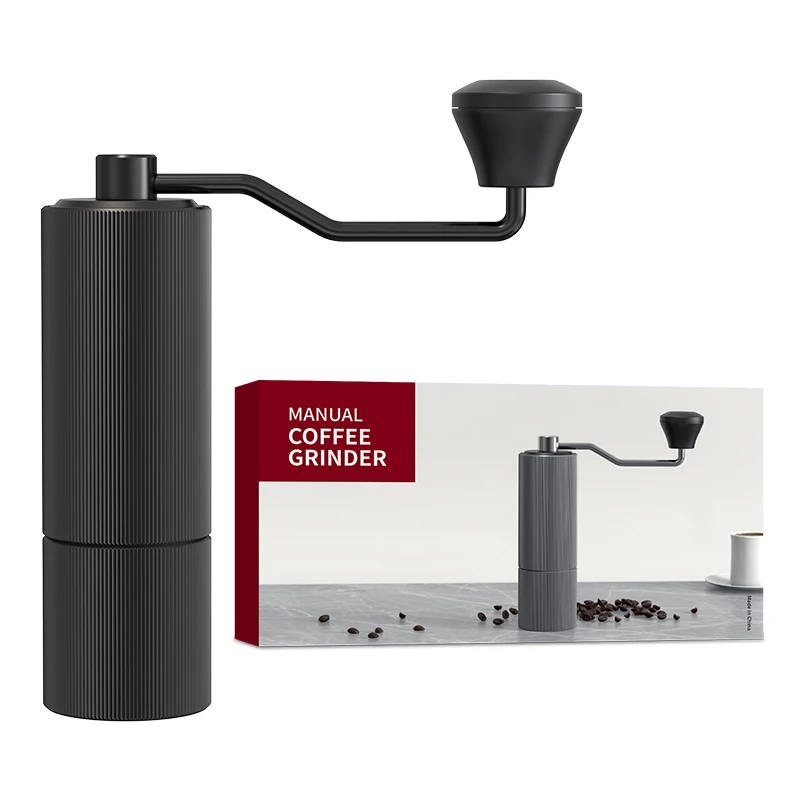
The type of grinder you use fundamentally impacts your ability to achieve espresso excellence. Let’s compare the main options:
Burr Grinders: Essential for Espresso
Why burr grinders essential espresso comes down to two critical factors: grind consistency and adjustment precision. Burr grinders use two abrasive surfaces (the burrs) to crush coffee beans to a specific, uniform size. This produces particles that extract at similar rates, leading to balanced flavor.
There are two primary types of burr grinders:
- Conical Burrs: Feature a cone-shaped inner burr that fits inside a larger outer burr. They typically generate less heat, produce slightly more “fines” (which some believe adds body to espresso), and are often quieter.
- Flat Burrs: Use two parallel rings with cutting teeth. They generally produce more consistent particle size and fewer fines, potentially creating more clarity in flavor.
Blade Grinders: Unsuitable for Espresso
Blade grinders chop beans with a spinning blade, creating highly inconsistent particle sizes—some powder-fine, others far too coarse. This inconsistency makes proper espresso extraction nearly impossible, as different-sized particles extract at different rates.
Manual vs. Electric Considerations
Quality manual coffee burr grinders can produce excellent espresso grounds, often at a lower price point than comparable electric models. The best manual grinders feature:
– Precision adjustment mechanisms
– Stable burr assembly with minimal wobble
– High-quality steel or ceramic burrs
– Comfortable ergonomics for the extended grinding time espresso requires
For espresso specifically, look for grinders with fine adjustment capability—the ability to make small, incremental changes that allow you to dial in precisely.
Beyond Grind: Other Important Variables in Espresso Extraction
While grind size is paramount, it exists within an ecosystem of variables that affect each other. Understanding these interactions helps you make more holistic adjustments:
Dose (Coffee Amount)
The amount of coffee you use affects how water flows through the puck. A larger dose creates more resistance, potentially requiring a slightly coarser grind to maintain proper flow.
Tamping Pressure and Technique
How firmly you compress the grounds affects density and resistance. A very firm tamp might require a slightly coarser grind than a lighter tamp to achieve the same flow rate.
Water Temperature
Higher temperatures extract coffee compounds more quickly. If you adjust your machine to a higher temperature, you might need to grind slightly coarser to prevent over-extraction.
Brew Ratio
Your target output (e.g., 1:2 ratio where 18g of coffee produces 36g of espresso) influences extraction. Longer ratios (like 1:2.5) might benefit from slightly coarser grinds than shorter, more concentrated ratios.
Pre-Infusion
If your machine offers low-pressure pre-infusion, this can help saturate the puck evenly before full pressure, sometimes allowing for a slightly finer grind without channeling.
Understanding these relationships helps explain why finding your ideal settings requires a systematic approach. For those pursuing espresso excellence, manual espresso grinders designed specifically for fine adjustments can make this calibration process more precise and rewarding.

All-Metal Hand Grinder, Flat Burr Hand Grinder, Manual Espresso Grinder, Precision Manual Grinder
Price range: $716.96 through $717.43 Select options This product has multiple variants. The options may be chosen on the product page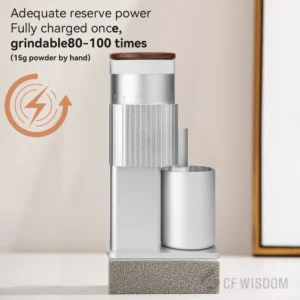
Fine Adjustment Hand Grinder, Precision Manual Grinder, Travel Coffee Grinder
Price range: $185.11 through $494.63 Select options This product has multiple variants. The options may be chosen on the product page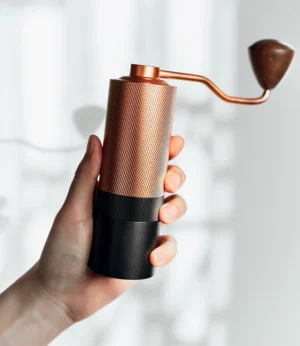

Hand Burr Grinder, Hand Crank Coffee Grinder, Manual Espresso Grinder, Portable Coffee Grinder
Price range: $262.72 through $300.22 Select options This product has multiple variants. The options may be chosen on the product page
Manual Burr Mill, Manual Coffee Grinder Stainless Steel, Manual Coffee Mill Grinder, Mechanical Coffee Grinder
Price range: $127.26 through $130.32 Select options This product has multiple variants. The options may be chosen on the product page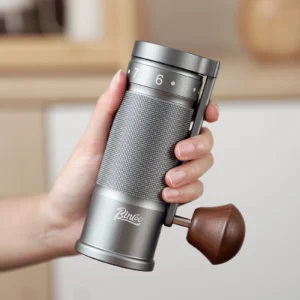
All-Metal Hand Grinder, Compact Coffee Mill, Hand Burr Grinder, Travel Coffee Grinder
$212.33 Select options This product has multiple variants. The options may be chosen on the product page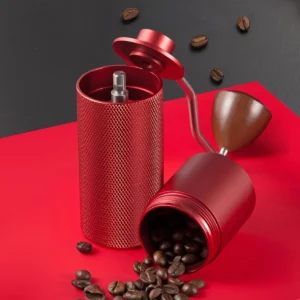
Hand Burr Grinder, Manual Coffee Grinder Stainless Steel, Precision Manual Grinder
Price range: $183.64 through $187.52 Select options This product has multiple variants. The options may be chosen on the product page
Maintaining Your Grinder for Consistent Espresso Results
Even the perfect grind setting won’t produce consistent results if your grinder isn’t properly maintained. Regular care ensures reliable performance and extends equipment life:
Regular Cleaning
- Clean your grinder burrs every 1-2 months for home use (more frequently for heavier use)
- Remove old coffee oils and particles that can become rancid and affect flavor
- Follow manufacturer guidelines for disassembly and cleaning methods
- Consider specialized grinder cleaning products that remove oils without water exposure
Burr Assessment and Replacement
Watch for these signs that burrs may need replacement:
– Noticeably less consistent grind size
– Difficulty achieving fine enough grind for espresso
– Increased noise during grinding
– Metal particles in your grounds (a sign of burr damage)
– Sudden changes in flavor profile despite consistent settings
Addressing Static and Retention
- The “Ross Droplet Technique” (adding a few drops of water to beans before grinding) can reduce static
- Tap the grinder gently to release retained grounds
- Consider single-dosing to minimize stale grounds mixing with fresh ones
Proper maintenance ensures that the espresso grind settings explained in your grinder’s manual will continue to deliver consistent results over time.
Why Small Grind Adjustments Make a Big Difference: The Precision Game
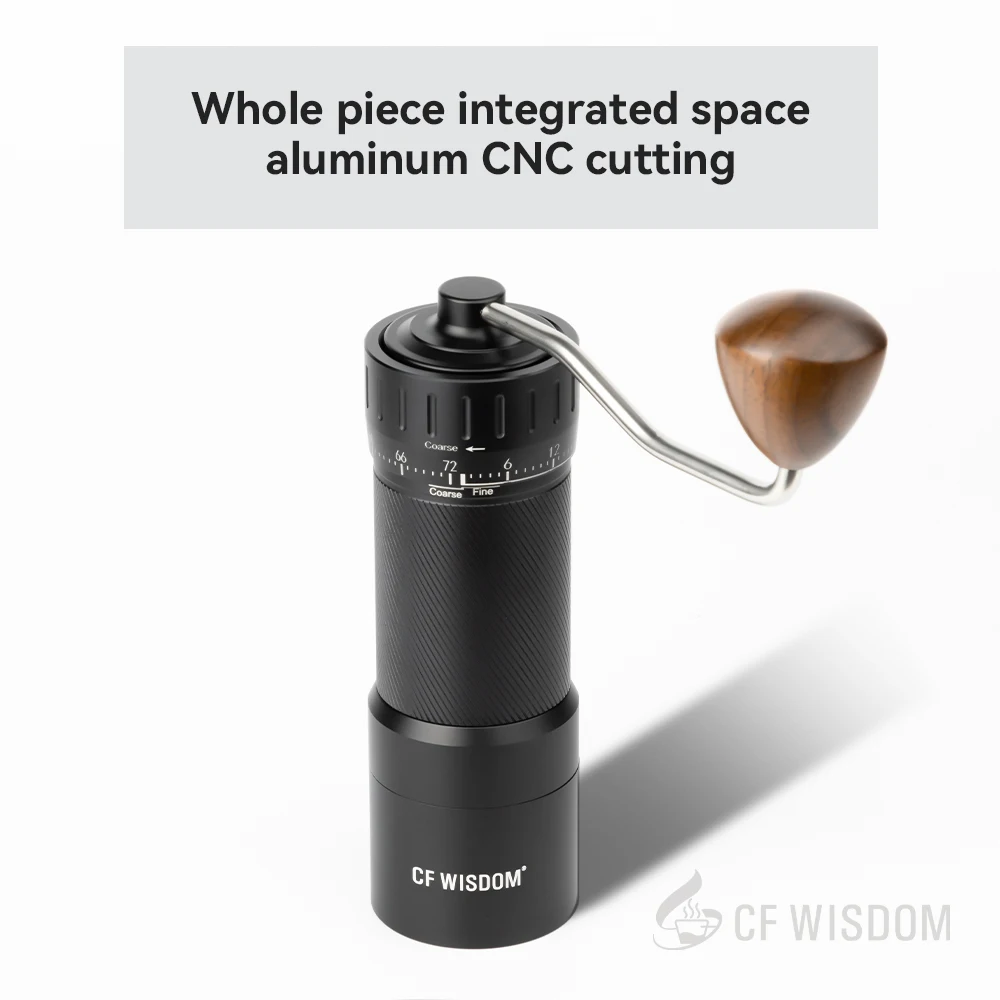
The extraordinary sensitivity of espresso to small grind adjustments cannot be overstated. This precision requirement is what distinguishes espresso from other brewing methods:
In pour-over coffee, a half-step adjustment might slightly alter extraction. In espresso, that same adjustment could transform a 20-second shot into a 35-second shot, completely changing the flavor profile. This sensitivity occurs because:
- The high-pressure environment amplifies the effect of particle size differences
- The short extraction time (25-30 seconds) leaves little margin for error
- The concentrated nature of espresso makes any extraction imbalance immediately noticeable
This is why precision grind adjustment espresso capabilities are essential in espresso grinders. The finest grinders offer micro-adjustments that allow baristas to make incremental changes to dial in the perfect extraction.
Developing sensitivity to these small changes is part of the espresso learning curve. With practice, you’ll begin to notice how quarter-turn adjustments affect both flow rate and flavor, allowing for increasingly refined results.
Is There a Perfect Universal Espresso Grind Setting?
Many new espresso enthusiasts ask whether there’s a universal “setting 9” or similar position that will work for all situations. The answer is definitively no—and understanding why helps set realistic expectations.
The ideal espresso grind setting varies considerably based on:
- The specific coffee bean (origin, processing, roast level)
- Your exact grinder model and its calibration
- Environmental conditions like humidity and temperature
- Your espresso machine’s specific pressure profile
- Your personal taste preferences
This variability explains why beyond numbers perfect espresso grind requires adaptation and sensitivity rather than rigid settings. Professional baristas understand this well, which is why they:
- Dial in fresh coffees before service begins
- Adjust grinders throughout the day as conditions change
- Make different adjustments for different coffee origins and roasts
- Rely on taste as the ultimate guide rather than specific numerical settings
The pursuit of perfect espresso becomes less about finding the “right” setting and more about developing the skill to adjust appropriately for each situation.
The Connection Between Coffee Freshness and Grind Adjustments
Coffee beans change dramatically after roasting, requiring ongoing grind adjustments to maintain optimal extraction. Understanding this timeline helps you anticipate necessary changes:
Just After Roasting (1-4 days)
Very fresh coffee contains significant CO2 gas, which can disrupt even water distribution during extraction. For espresso specifically, most professionals prefer to let coffee rest 5-7 days after roast date before using it.
Prime Window (7-21 days post-roast)
During this period, coffee has degassed sufficiently while retaining peak aromatics and oils. Within this window, you’ll still need to make minor adjustments as the coffee continues to change:
– Early in this window: Beans may need a slightly coarser grind
– Later in this window: Gradually adjust finer as beans age and lose moisture
Beyond Peak Freshness (21+ days)
As coffee ages further:
– Oils begin to oxidize, losing complexity
– Beans lose moisture content, becoming more brittle
– You’ll typically need to grind progressively finer to maintain proper extraction time
– Eventually, no grind adjustment will compensate for the flavor loss
These changes explain why following the 30 second espresso rule complete guide requires different grind settings throughout a coffee’s lifespan. The rule remains the same (aiming for that optimal extraction time), but the grind setting needed to achieve it will change.
Learning from Professional Baristas: Grind Size Best Practices
Professional baristas develop workflows and habits that home enthusiasts can adapt for better results. Here are some key practices worth adopting:
Regular Check and Adjustment Routines
- Start each day with a test shot to assess grind needs
- Make adjustments before problems become evident
- Pay attention to weather changes that might affect grind requirements
When to Start Over vs. Make Incremental Changes
- Small fluctuations in shot time (±2-3 seconds): Make minor adjustments
- Major problems (gushing shots, choking): Make a significant adjustment and pull a new test shot
- New coffee or first shot of the day: Expect to pull 2-3 test shots before achieving optimal extraction
Workflow Efficiency
- Change one variable at a time to clearly understand cause and effect
- Keep notes on different coffees and their optimal grind settings
- Develop consistent habits for dosing, distribution, and tamping to isolate grind as the primary variable
Many professionals use techniques for manual automatic espresso grinder settings that combine the precision of manual adjustment with the efficiency of automated dosing. This hybrid approach often yields the best results while maintaining workflow efficiency.
Espresso Grinders: Manual vs. Electric for Precision Control
When choosing between manual and electric grinders for espresso, each option offers distinct advantages:
Manual Grinders
Quality manual grinders can produce excellent espresso grounds with several advantages:
– Often more affordable than electric grinders of similar quality
– Greater portability for travel or small spaces
– No electricity requirements
– Often lower noise levels
– Some models offer excellent adjustment precision
– Typically last longer with fewer mechanical failures
The drawbacks primarily involve convenience:
– Physical effort required for each dose
– Longer grinding time (1-2 minutes per espresso dose)
– Some models have less consistent grind at very fine settings
Electric Grinders
Electric models excel in:
– Convenience and speed
– Consistency for high-volume use
– Often larger burr sets for improved grind consistency
– More granular adjustment systems on higher-end models
However, they typically:
– Cost significantly more for comparable quality
– Occupy more counter space
– Generate more noise
– Have more potential failure points
For home users, best manual grinders espresso can offer an excellent balance of performance and value. The key features to look for include stability in the burr mounting, precision adjustment capability, and high-quality burrs designed for espresso-fine grinding.
Savor Suite’s selection focuses on manual grinders that meet these exacting standards, providing the precision necessary for espresso without the high cost of electric alternatives.
With dedicated practice and the right equipment, achieving café-quality espresso at home is entirely possible. The journey of mastering grind size might seem technical at first, but it quickly becomes intuitive—and the rewards in your cup make every adjustment worthwhile.